
Four Basic Conditions
By Curtis R.
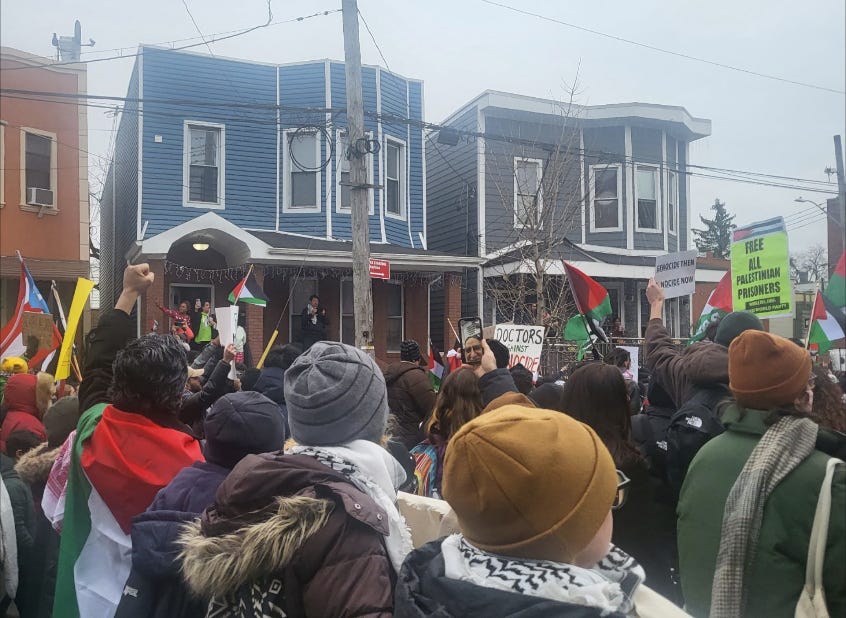
2024 Rally for Palestine in the Bronx [Photo credit: Curtis R]
Publicly oppose all funding to Israel, including the Iron Dome
Participate regularly in the DSA Federal Socialists in Office [FSIO] Committee
Publicly oppose all criminalization of Anti-Zionism, such as bills advancing the IHRA definition which conflates criticism of Israel with anti-semitism
Publicly support BDS (Boycott, Divest, and Sanction) to end Israeli settler-colonialism
On July 10, 2024, the National Political Committee voted to endorse Congresswoman Ocasio-Cortez (AOC) if she agreed to meet these four basic conditions. This was the first time the body had issued a conditional endorsement, rooted in DSA’s resolute commitment to Palestinian liberation. After nearly a year of genocide, enthusiastically armed by the Biden administration, the NPC felt it was time for endorsed officials to truly embody the positions of the organization.
Opposing the Iron Dome—Israel’s missile defense system—is a prerequisite for upholding the principle of an arms embargo against an apartheid regime that weaponizes military superiority to conduct a genocide. Participation in the FSIO means attending meetings to build coordination between endorsed federal electeds, DSA, and each other. Opposing the conflation of Anti-Zionism with anti-semitism has long been a basic principle of both Palestinian and Jewish Anti-Zionist movements, and BDS has similarly been a long-standing tactic to apply pressure on the Israeli regime, modeled on the successful campaign against South African apartheid.
These basic conditions were apparently too much for the then NYC-DSA Steering Committee, which had submitted AOC’s endorsement for national consideration. After the NPC proactively set Anti-Zionist endorsement conditions, NYC-DSA immediately rescinded the endorsement request. Over a year and a half later, at a NYC-DSA endorsement forum, AOC moved towards meeting these very same conditions that NYC-DSA leadership found unconscionable. Many are left wondering how this development came to pass. The events of the past year and a half provide some answers.
DSA Sets the Scene
DSA’s 2025 National Convention deepened our practical commitments to Palestinian solidarity, both through electoral standards and organizing campaigns. The National Electoral Committee consensus resolution declared that future endorsements would consider the campaign’s stance on key issues regarding Palestinian liberation. The International Committee consensus resolution launched a BDS priority campaign targeting Chevron. Most significantly, DSA’s convention delegates passed Resolution 22 (R22): For a Fighting Anti-Zionist DSA. The resolution set clear standards that any national or chapter-endorsed candidate who publicly opposed BDS, affiliated with Zionist lobby groups like AIPAC and J Street, or voted to provide material aid to Israel would be ineligible for endorsement. An amendment that tried to loosen these standards failed.
DSA National Convention is the highest democratic body of DSA. Thousands of members participate in electing delegates who determine the direction and policy of the organization for the next two years. R22’s victory reflected the organizing will of DSA’s rank-and-file, who had already won local versions of the resolution in over 80 chapters.
Organizing Takes Off
Throughout the Biden years into the Trump administration, Democrats stood firm with Israel, even as it escalated its genocide against the Palestinian people. On November 20, 2024, just days after Trump’s victory over Harris, all but 3 Democrats—Cori Bush, Rashida Tlaib, and Ilhan Omar—voted with Republicans on H.Res.1449 to promote “Global Guidelines for Countering Antisemitism,” a stand-in for IHRA. By that point, Israel’s unpopularity was obvious (its public opinion polling could sink in the Dead Sea). Biden’s, then Harris’s, steadfast support of Israel cost them the election. The work that has led to historic shifts towards broad support of Palestine can be attributed to the pro-Palestine organizers who have spent years, if not decades, building a base capable of winning over the working class.
Since Trump’s election, DSA has also experienced a resurgence. While our membership floundered under Biden, new members have joined DSA in droves: beginning 2025 with 58,000, DSA surpassed 100,000 members by February 2026, its largest size yet. November 2025 saw massive victories for DSA’s nationally endorsed slate—bolstered by the NEC program, Socialist Cash, which raised over $100,000. In New York City, DSA-endorsed candidate Zohran Mamdani won a competitive general election to become mayor of the largest city in the country as an openly pro-Palestine candidate.
Putting it all Together
AOC’s “change of heart” didn’t happen due to a personal epiphany or through conversation with her closest colleagues in Congress, like Rashida Tlaib, who herself made thinly veiled criticisms of AOC’s support for the Iron Dome on the DSA convention floor in 2025 by insisting that ”weapons are weapons,” defensive or not. DSA’s membership, through its highest body at the National Convention, committed itself to higher standards on Palestinian liberation. This is part of a movement within the entire organization to insist on the centrality of our platform when assessing electoral endorsements.
In New York City, we can now say with some confidence that each of our electeds oppose aid to Israel. AOC no longer believes in funding Israel’s “defensive Iron Dome capacities,” however, her new line seems to endorse a plan for Israel to finance the Iron Dome “independently.” DSA must build from our position to insist on a unified demand for an arms embargo: a set of sanctions aimed at completely neutralizing Israel’s ability to purchase arms or any other material that facilitates its ability to wage war on the international market.
Building on the Program
When DSA operates this way—confident and self-assured in our politics—we not only cultivate candidates that represent our platform, we can initiate a sea change where politicians at the margins of our organization begin to realize the isolation of their position. DSA will consider as many as 12 congressional candidates this cycle, many of whom will place Palestinian liberation at the center of their campaigns. As Zionism becomes unelectable, is it viable to continue standing out like a sore thumb?
Sharpening our political scrutiny has coincided with dramatic membership growth. We did not put out these positions to tail public opinion—which until several years ago, supported Israel over Palestine—but to organize the working class into a new political majority. These developments are an affront to those, like NYC-DSA leadership, who believe an organization with standards is one that cannot grow. When we ask “Why did AOC change her tune?”, many are quick to emphasize the privileged relationship of individuals with an ear to AOC’s office. But the answer lies not in insider lobbying, but in the reality of mass politics.
DSA has developed into an organization that is increasingly willing to exert “democratic discipline,” which binds electeds and members to the democratic decisions made by the membership, especially on the issue of Palestine. Those fighting for this change within the organization were one part of a rapidly growing Palestinian liberation movement, which accompanied a massive shift in U.S. public opinion. As we continue to build DSA into a real party, the choice between a mass political movement committed to unity around a socialist program and flimsy back-room wheeling and dealing has never been more obvious.